
Best Time to Visit the Blue Mosque
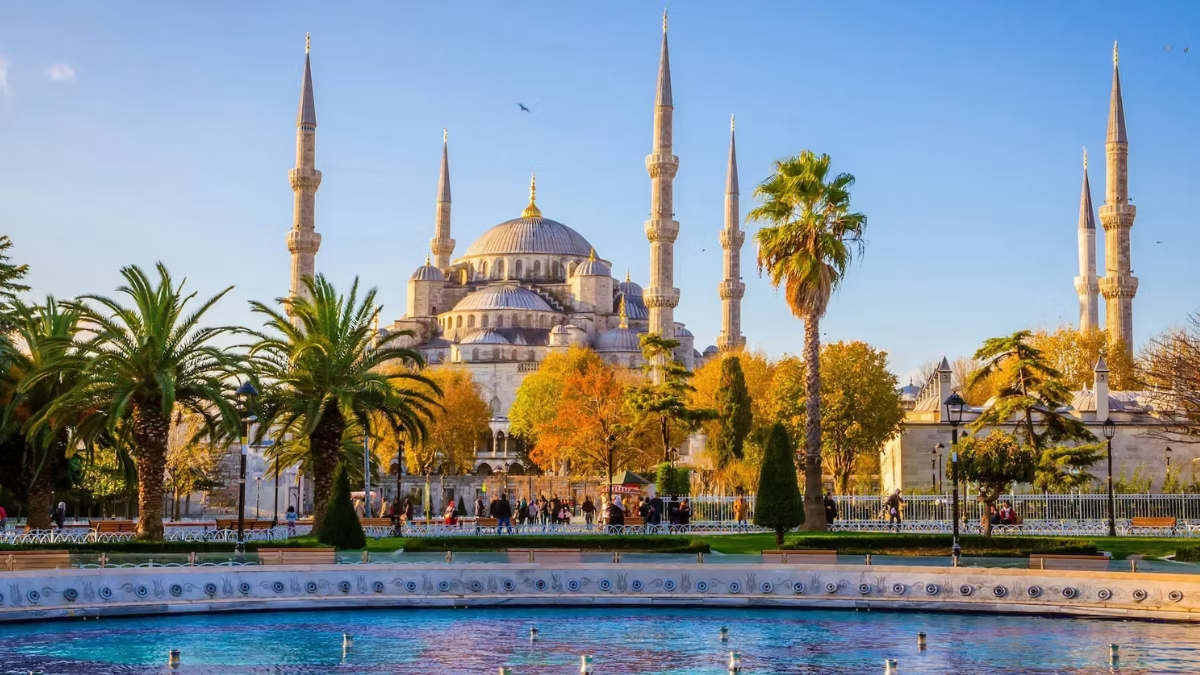
The best time to visit the Blue Mosque is on a weekday morning in spring (April–May) or early autumn (September–October), arriving at 08:30 when the doors open. This avoids peak summer crowds, beats the tour groups, and catches the most beautiful natural light inside the prayer hall. Avoid Fridays (closed until 14:30) and the midday prayer closure window (roughly 13:00–14:30).
Timing your visit to the Blue Mosque well is not complicated — but it does reward a little planning. The mosque is open every day, entry is free, and there are no tickets to book in advance. What shapes your experience is a combination of season, day of the week, time of day, and the five daily prayer closures that temporarily shut the doors to non-Muslim visitors. Get these four variables right and you will walk into one of the world’s great sacred spaces in near-silence, with golden light filtering through 260 stained-glass windows and almost no one in your way. Get them wrong and you may find yourself at the back of a long queue, or turned away at the gate entirely.
This guide addresses each variable in turn, then gives you a clear recommendation for every type of traveller.
Best Season to Visit the Blue Mosque
The best seasons to visit the Blue Mosque are spring (April–May) and early autumn (September–October). During these shoulder months, Istanbul’s weather is mild and comfortable, crowds are noticeably smaller than in summer, and the quality of light inside the mosque — warm and diffuse — is at its most photogenic. Both periods offer a strong balance of good conditions without the intensity of peak season.
Spring: April and May (Highly Recommended)
April and May are widely regarded as the finest months to visit the Blue Mosque and Sultanahmet as a whole. Daytime temperatures in Istanbul hover between 14°C and 22°C — warm enough to explore on foot all day, cool enough that standing in a queue feels comfortable rather than punishing. Tourist numbers are rising but have not yet hit peak levels, meaning you will share the prayer hall with a fraction of the summer crowd. Sultanahmet Square is also at its most beautiful in April, when tulips bloom around the fountains and the gardens surrounding the mosque are lush and green. The natural light entering through the mosque’s windows is soft and warm in the late afternoon.
Early Autumn: September and October (Highly Recommended)
September is arguably the single best individual month to visit. The summer crowds have begun to dissipate, the temperatures drop to a comfortable 20–25°C, and the city has a calm, golden quality. October remains excellent and sees further crowd reductions, though the weather turns cooler and occasionally rainy by late in the month. If you are visiting specifically for photography — capturing the Iznik tile work, the cascade of domes, or the minarets against the sky — the autumn light in September and October is exceptionally rich.
Summer: June to August (Manageable with Planning)
Summer is Istanbul’s peak tourist season. The Blue Mosque receives the highest visitor volumes from late June through August, and the combination of heat (often 30°C or above) and crowds means a less comfortable experience for most visitors. That said, summer visits are entirely manageable if you arrive at 08:30 sharp, before tour groups fill the interior. The long daylight hours also mean the mosque stays open later into the evening, giving you more flexibility. If summer is your only option, see the time-of-day section below for the two windows that work best.
Winter: November to March (Quiet, Cold, Rewarding)
Winter is the Blue Mosque’s best-kept secret. Tourist numbers drop significantly from November onwards, and by January and February you can often experience the Sultan Ahmed Mosque with almost no other visitors present. The atmosphere inside the prayer hall — with its 20,000 Iznik tiles, elaborate calligraphy, and towering central dome — is deeply serene when it is quiet. The trade-off is cold, damp weather and short visiting windows (the mosque closes around 16:30 or earlier as the sun sets early). Come prepared with layers, check the prayer schedule carefully, and you will have an experience that summer visitors will never get.
Best Day of the Week to Visit
Tuesday, Wednesday, and Thursday are the best days to visit the Blue Mosque. These mid-week days see the fewest tourists and the calmest atmosphere. Monday is slightly busier as the week’s visitors settle in. Friday is the most important day in the Islamic calendar — the mosque is closed to non-Muslim visitors until 14:30 and sees its largest congregations. Weekends are consistently the busiest for tourist foot traffic.
Best days: Tuesday, Wednesday, Thursday
Mid-week mornings offer the quietest conditions of any day of the year. Tour groups tend to be scheduled at the start or end of the week, and individual travellers spread more evenly across Tuesday–Thursday.
Avoid: Friday
Friday is Jumu’ah — the Friday congregational prayer — and the mosque does not open to non-Muslim visitors until 14:30. The morning is used for cleaning and spiritual preparation. Once the mosque does open in the afternoon, crowds surge as visitors who have been waiting descend all at once. If Friday is your only day in Istanbul, spend the morning at Hagia Sophia or the Basilica Cistern and arrive at the Blue Mosque from 15:00 onwards when the initial rush has thinned.
Weekends: Busier, but workable
Saturday and Sunday attract higher numbers of both tourists and local visitors. If you must visit on a weekend, the 08:30 opening is your best strategy — arrive five minutes early and you will still be ahead of the crowds.
Best Time of Day to Visit
The two best times of day to visit the Blue Mosque are right at opening (08:30) and in the late afternoon (approximately 16:00–17:30 in summer, 15:00–16:00 in winter). The morning window offers the calmest, most crowd-free experience of the day. The late afternoon offers warm, angled light through the stained-glass windows and noticeably thinner crowds as day-trippers and tour groups have moved on.
08:30 — The best single moment of the day
Arriving at the tourist entrance (on the south side of the mosque, facing the Hippodrome) at 08:30 when the doors open is the single most effective strategy for a peaceful visit. The prayer hall in the early morning is cool, quiet, and bathed in soft light that filters through the 260 windows in delicate blues and golds. Tour groups rarely arrive before 09:30–10:00, so you have a genuine window of calm. Plan to spend 45–60 minutes inside and you will be exiting just as the first rush begins.
Late afternoon — the second-best window
From about 16:00 in summer and 15:00 in winter (after the Asr prayer closure ends), the crowds thin considerably. Day-trippers have largely departed, tour buses have returned to hotels, and the mosque settles into a calmer rhythm. The late afternoon light is often the most atmospheric of the day, particularly in the golden hour before the Maghrib closure. This is also the best window for photography inside the prayer hall.
Midday: avoid
The slot between roughly 11:00 and 15:00 is the busiest period of the day, combining peak tourist traffic with the Dhuhr prayer closure around 13:00–14:30 that turns visitors away at the gate. If you arrive mid-morning and stay too long, you may find yourself caught in this window.
How Prayer Closures Affect Your Planning
The Blue Mosque closes five times daily for Islamic prayer, with each closure lasting approximately 90 minutes. For a detailed breakdown of all five prayer windows and approximate times by season, see our Blue Mosque opening hours guide.
For timing purposes, the two closures that most commonly affect tourists are:
- Dhuhr (midday prayer): roughly 13:00–14:30, right in the middle of peak visiting hours
- Asr (afternoon prayer): roughly 15:30–17:00 in summer, earlier in winter
Building your visit around these windows — either completing your visit before Dhuhr or arriving after Asr — gives you uninterrupted access and the best possible experience.
Best Time to Visit by Traveller Type
First-time visitors: Weekday morning in April, May, September, or October. Arrive at 08:30.
Photographers: Late April or September, arriving at 08:30 for interior shots. Return in late afternoon (16:00–17:00) for exterior golden-hour shots of the minarets and domes.
Families with children: Mid-week mornings in spring or autumn. The mosque is easier to navigate with children when it is quiet, and modest clothing requirements are simpler to manage when it is not swelteringly hot.
Budget travellers / winter visitors: January–February on a Tuesday or Wednesday morning. The mosque is at its emptiest, and flights and hotels in Istanbul are at their lowest prices of the year.
Visitors on a tight schedule: Book a guided tour — a good guide will manage the prayer closure timing for you automatically, ensuring you are not turned away at the gate. The Hagia Sophia + Blue Mosque combo is particularly efficient for visitors who want to cover both landmarks in a single morning.
Quick Reference: Best and Worst Times at a Glance
| Variable | Best | Worst |
|---|---|---|
| Season | April–May, September–October | July–August |
| Month | April, September | August |
| Day of week | Tuesday, Wednesday, Thursday | Friday, Saturday |
| Time of day | 08:30 opening, late afternoon | 11:00–14:30 |
| Weather | Spring, early autumn | Midsummer heat |
Frequently Asked Questions
What is the best month to visit the Blue Mosque?
April and September are the two best individual months. Both offer mild temperatures, manageable crowds, and excellent light conditions inside the mosque. April adds the bonus of tulip season in Sultanahmet Square; September offers the warmth of summer without the peak crowds.
Is it worth visiting the Blue Mosque in winter?
Yes, particularly if you prioritise atmosphere over weather. Winter visits — especially January and February — offer the quietest conditions of any time of year. The cold and short visiting windows are the main drawbacks, but the experience inside the mosque can be deeply peaceful and memorable.
What time does the Blue Mosque get crowded?
The mosque begins to fill noticeably from around 09:30–10:00, when the first tour groups arrive. By 11:00–12:00, it is at its busiest. Crowds thin again after 16:00 in the afternoon.
Should I visit the Blue Mosque or Hagia Sophia first?
If visiting both on the same day, we recommend starting at the Blue Mosque at 08:30 (it fills faster with tour groups), then crossing Sultanahmet Square to Hagia Sophia once you are done. A combined guided tour handles the sequencing for you and is the most efficient option.
Can I visit the Blue Mosque on a Sunday?
Yes — the mosque is open on Sundays with no special restrictions beyond the usual prayer closures. Sundays are moderately busy, sitting between the quieter mid-week days and the busiest Fridays and Saturdays.
