
Blue Mosque Photo Guide: Best Spots & Lighting Tips
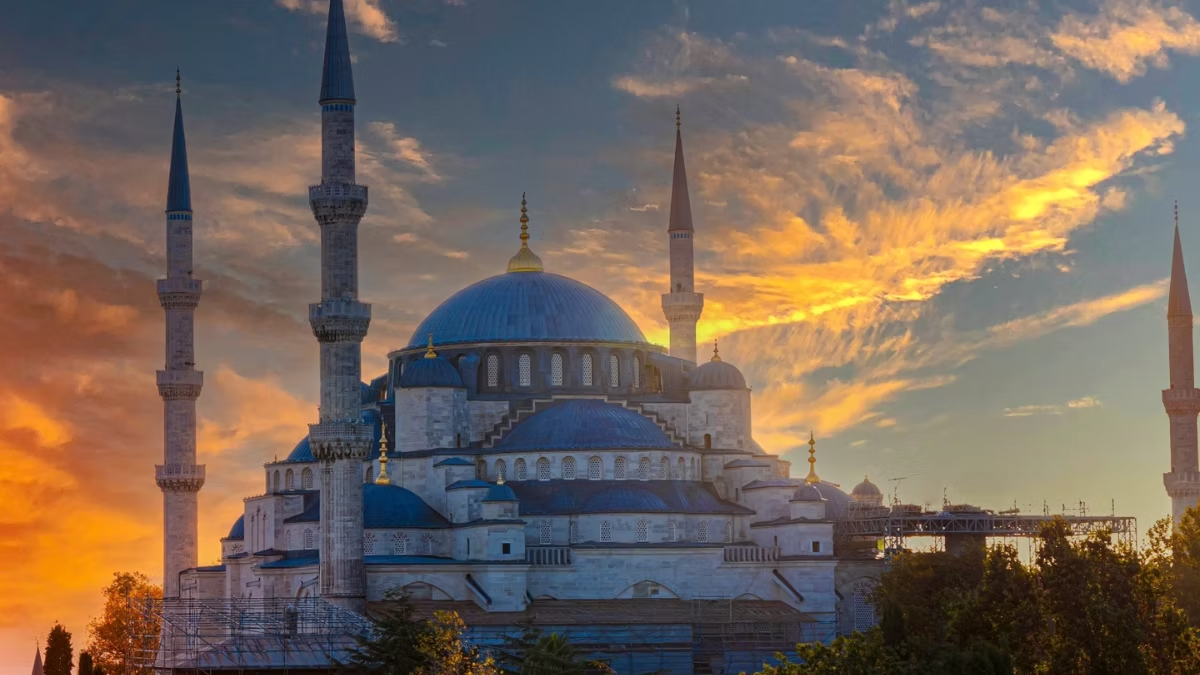
The best exterior shot of the Blue Mosque is from Sultanahmet Archaeological Park (between the mosque and Hagia Sophia), using the central fountain as a foreground element. The best lighting is in the late afternoon when the sun hits the mosque’s west and south façades directly. Inside, the best shot is looking straight up at the central dome from directly beneath it, taken at 08:30 when the morning light through 260 stained-glass windows is at its most ethereal. Flash is strictly forbidden inside.
The Blue Mosque is widely regarded as the most photogenic landmark in Istanbul — a city with no shortage of competition. Its six minarets, cascading dome system, and warm stone façade offer something usable from almost any angle and at almost any time of day. The interior, with its 20,000 Iznik tiles and filtered coloured light, is arguably even more rewarding.
This guide is organised by location: exterior spots first, interior spots second, and then by time of day and season. Whether you are shooting on a smartphone or a dedicated camera, these are the spots and moments that consistently produce the strongest results.
Photography Rules to Know Before You Start
Before covering the spots, the essential rules:
Inside the mosque:
- Flash photography is strictly forbidden — the intense light damages the 400-year-old Iznik tiles and disturbs worshippers
- Tripods are not permitted inside the prayer hall
- Do not photograph worshippers during prayer or performing ablutions — wait until they have moved on or shoot away from individuals
- Selfie sticks are discouraged and may be asked to be put away by staff
- During prayer times, photography must stop and visitors are asked to leave
Outside the mosque:
- No restrictions on photography in the courtyard or exterior
- Tripods are permitted outside
- At night, long-exposure photography is popular and completely unrestricted from public ground
Modern smartphones handle the interior light well in standard photo mode. If you are using a camera, a wide-angle lens (14–24mm on full frame, or equivalent) is the most useful focal length for both interior dome shots and wide exterior compositions. A 70–200mm telephoto is useful for compressing the minarets and pulling out tile details from a distance.
Best Exterior Photo Spots
Spot 1: Sultanahmet Archaeological Park (Between the Mosque and Hagia Sophia)
Best for: Classic wide shots, fountain foreground, both mosques in one frame
Best time: Late afternoon / golden hour, or just after dawn
This garden — officially the Sultanahmet Arkeolojik Parkı — sits directly between the Blue Mosque and Hagia Sophia and is the single most productive photography location in the entire Sultanahmet district. The central fountain provides an excellent foreground element: position yourself on the path leading toward the Blue Mosque with the fountain in the lower third of the frame and the mosque filling the upper two-thirds.
Because Sultanahmet Square is oriented northeast-southwest, the sun illuminates the Blue Mosque’s façade best in the late afternoon and early evening — this is the golden-hour window for the mosque’s exterior. Morning light falls on Hagia Sophia from this position.
For a wider composition including both mosques, step back toward the Hagia Sophia end of the park and use a wide-angle lens to catch both landmarks in a single frame — one of the most iconic double-monument shots available anywhere in the world.
Tip: In April, the tulip gardens surrounding the fountain are in bloom and add extraordinary colour to foreground compositions. The tulip-and-mosque combination is one of the most sought-after shots in Istanbul’s photography calendar.
Spot 2: The Hippodrome (At Meydanı)
Best for: Layered minaret shots, crowd-free morning compositions, oblique façade angles
Best time: Early morning (08:00–09:30) or evening
The Hippodrome runs directly along the western façade of the Blue Mosque and provides a clear open forecourt for photography without the garden barriers of the park. From the Hippodrome, the six minarets appear to layer behind each other as they recede into depth — a compression effect that is particularly striking with a 70–100mm focal length.
The Egyptian Obelisk and Serpent Column can be incorporated as foreground elements for compositional interest. Early morning is the quietest time here, before tour groups arrive from 09:30 onwards.
Spot 3: Sultanahmet Square (Northwest Façade)
Best for: Symmetrical full-façade shots, courtyard gate details
Best time: Late afternoon, blue hour, night
The courtyard entrance on the northwest side — facing Sultanahmet Square — offers the most directly symmetrical view of the mosque’s façade. The monumental gateway, flanked by the six minarets rising above, is the classic postcard composition. This spot is busiest during the day; by evening and night, the crowds thin and the mosque’s floodlighting creates a warm, dramatic effect.
Spot 4: Rooftop Terraces in Sultanahmet
Best for: Elevated panoramics, Blue Mosque and Hagia Sophia together, sunset shots
Best time: Sunset and early evening
Several rooftop restaurants and hotels in the Sultanahmet neighbourhood offer elevated views of the Blue Mosque and Hagia Sophia. The most widely referenced is Seven Hills Restaurant, whose terrace directly overlooks both landmarks. Hotel terraces — particularly those on Akbıyık Caddesi, the street running along the mosque’s south side — provide similarly good angles.
For photographers: rooftop terraces are the only practical way to shoot the Blue Mosque from an elevated perspective, capturing the dome cascade from above rather than from street level. Sunset from a terrace, with the floodlit minarets against a deepening sky, is one of the most striking Istanbul compositions available.
Spot 5: The Upper Gallery of Hagia Sophia
Best for: Framed shots of the Blue Mosque through arched windows
Best time: Morning (when light falls into the gallery)
The upper gallery of Hagia Sophia — accessible during normal visiting hours — contains several windows facing southwest toward the Blue Mosque. Through these arched Byzantine windows, you can frame the Blue Mosque’s domes and minarets in a genuinely unique way: an Ottoman masterpiece seen through the arches of its Byzantine predecessor. This is one of the more technically challenging but most distinctive shots available of the mosque’s exterior.
Note that Hagia Sophia is a paid-entry site. Check current visiting requirements before planning this shot.
Spot 6: Mehmet Akif Ersoy Park
Best for: Telephoto compression of the minarets, night photography, less-visited angle
Best time: Night
This small park on the southern side of the mosque offers a less-visited angle on the Blue Mosque’s exterior, with clear sightlines to the minarets and dome. At night, with a tripod and a 70–200mm lens, the compression of the minarets against the lit sky produces a very different image from the wide standard shots available from Sultanahmet Square.
Best Interior Photo Spots
Interior Spot 1: Directly Beneath the Central Dome
Best for: Upward dome shot, stained-glass light, symmetry
Best time: 08:30–09:30 (morning light)
Position yourself in the centre of the visitor circulation area — between the roped prayer zone and the gallery perimeter — and look straight up. The central dome at 43 metres is extraordinary from directly below. Use your widest lens and shoot in portrait (vertical) orientation to capture the full cascade from dome to semi-dome to gallery arch.
The morning light from the east-facing windows (08:30–09:30) produces the softest and most evenly distributed illumination of the interior. The 260 stained-glass windows cast pools of coloured light across the carpet and lower walls — a quality of light that disappears once direct sunlight shifts away from those windows.
Interior Spot 2: The Gallery Perimeter — Iznik Tile Detail
Best for: Close-up tile patterns, arabesque detail, macro-style shots
Best time: Any time (artificial light is consistent)
Walk the full perimeter of the visitor area at gallery level and stop at the lower wall sections where the Iznik tile panels are closest. The floral motifs — tulips, carnations, roses, and cypresses — are extraordinarily detailed at close range. For tile photography, a 50mm or short telephoto (85–100mm) works better than a wide-angle lens, allowing you to isolate individual panels against a blurred background.
Interior Spot 3: Looking Toward the Mihrab
Best for: Symmetrical shot of the qibla wall, mihrab and minbar framing
Best time: Late afternoon (west-facing light)
Position yourself at the back of the visitor area, looking straight toward the mihrab wall. The symmetrical composition — mihrab in centre, minbar to right, tile panels flanking, arches above — captures the essential proportional logic of the prayer hall. In the late afternoon, angled light from the west-facing windows falls across the mihrab and minbar, picking out the carved marble detail.
Interior Spot 4: The Archways Leading to the Dome
Best for: Calligraphy detail, arch framing, depth composition
Best time: Any time
Stand beneath any of the four main arches leading into the central dome and shoot along the arch face. The calligraphic inscriptions by Seyyid Kasım Gubari run around the arch frames in large-scale script — most visitors walk past without looking up at these, making them one of the most underused compositional elements in the interior.
Best Times for Photography
| Time | Exterior | Interior |
|---|---|---|
| Dawn / sunrise | Minarets against the lightening sky | Not yet open |
| 08:30–09:30 | Soft, even light on façade — few crowds | Best interior light — coloured window glow |
| 10:00–13:00 | Harsh overhead light | Usable but crowded |
| 13:00–15:00 | Prayer closure | Prayer closure |
| 15:30–17:00 | Good south and west light | Good — crowds thinning |
| Golden hour | Warm light on west/south façade — optimal | Still open, warm window light |
| Blue hour / night | Floodlit minarets and domes — dramatic | Closed |
The two best photography windows: 08:30–09:30 (interior and exterior both excellent, minimal crowds) and the hour before closing in late afternoon (exterior golden hour, interior warm light). Both are also the best times to visit generally.
Seasonal Photography
Spring (April–May): The tulip gardens in Sultanahmet Square bloom in April, offering the most distinctive foreground element available for Blue Mosque exterior shots. The quality of light in spring is soft and even. Highly recommended for photography.
Summer (June–August): Long days and late sunsets give photographers more golden-hour time. However, crowds in the foreground of every exterior shot are a significant challenge. Arrive before 08:30 for clean exterior shots or shoot late evening when tourists have largely departed.
Autumn (September–October): The golden September light is arguably the finest photography light of the year in Istanbul. Crowds are reduced from summer peaks. September is the best overall month for photography at the Blue Mosque.
Winter (November–March): On rare occasions when Istanbul receives snowfall, the blue-grey stone of the mosque’s domes and minarets against a white sky creates genuinely exceptional images — a rare sight that circulates widely on photography forums. Overcast winter skies also diffuse light in ways that reduce harsh shadows on the exterior. The quietest crowds of any season.
Practical Camera Advice
Wide-angle lens (14–24mm full-frame equivalent): Essential for interior dome shots and capturing the full exterior façade.
Standard zoom (24–70mm): The most versatile for moving between interior tile details and exterior compositions.
Telephoto (70–200mm): Best for compressing the minarets from the Hippodrome, isolating tile panels at close range, and shooting from rooftop terraces.
High ISO capability: The interior of the Blue Mosque is well-lit by mosque standards, but shooting without flash at 08:30 still requires ISO 800–3200 depending on your sensor. Modern smartphones handle this well.
No tripod inside: Work with whatever stable surface you can find — railing edges, walls, your bag — for slower shutter speeds.
Tripod outside: Essential for blue-hour and night shots from Sultanahmet Square and the Hippodrome. A remote shutter or the camera’s self-timer eliminates shake at long exposures.
Frequently Asked Questions
Can you take photos inside the Blue Mosque?
Yes, photography is permitted inside the Blue Mosque. Flash photography is strictly forbidden, as it damages the ancient Iznik tiles and disturbs worshippers. Tripods are also not permitted inside the prayer hall. Do not photograph worshippers during prayer.
What is the best time of day to photograph the Blue Mosque exterior?
The late afternoon golden hour is the best time for exterior photography — the sun illuminates the mosque’s western and southern façades directly, producing warm, raking light that picks out the stonework detail. Early morning (before 09:00) is the best time for clean shots without crowds in the foreground.
What is the best spot to photograph the Blue Mosque?
For the classic wide exterior shot, Sultanahmet Archaeological Park with the central fountain as foreground is the most productive location. For an elevated panoramic including both the Blue Mosque and Hagia Sophia, a Sultanahmet rooftop terrace — particularly Seven Hills Restaurant — is the standard recommendation.
Can you take photos of the Blue Mosque at night?
Yes. The mosque is dramatically floodlit at night and accessible from all surrounding public areas. Long-exposure night photography with a tripod from Sultanahmet Square and the Hippodrome is unrestricted and produces excellent results.
Is photography allowed in the courtyard?
Yes, there are no photography restrictions in the courtyard. Tripods are permitted. The courtyard is accessible even during prayer closures when the prayer hall itself is closed to visitors.
