
Blue Mosque Dress Code: What to Wear
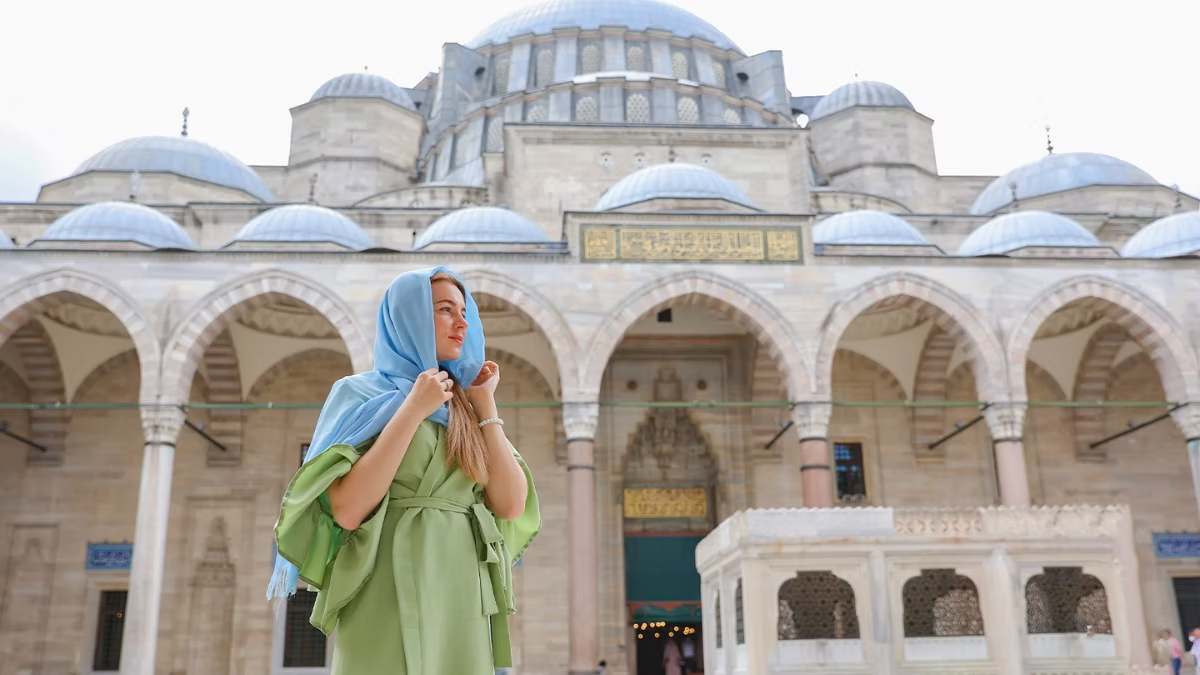
All visitors to the Blue Mosque must cover their shoulders and knees. Women must also cover their hair with a headscarf. No shorts, sleeveless tops, or tight-fitting clothes are permitted. If you arrive underdressed, the mosque provides free scarves and robes at the entrance — but coming prepared saves time and avoids the queue at the clothing stand.
The Blue Mosque (Sultan Ahmed Mosque) is one of the most visited landmarks in Istanbul, welcoming around 4.5 million visitors annually. It is also a fully functioning place of Islamic worship, active every day of the year. That combination means the dress code is non-negotiable: staff at the tourist entrance check every visitor before allowing entry, and those who do not comply are asked to cover up before proceeding.
The good news is that the rules are simple, the mosque provides everything you might need for free, and with a small amount of preparation you will walk straight through the gate without any delay. This guide tells you exactly what to wear, what to avoid, what happens if you arrive underdressed, and how to plan your outfit depending on the season.
The Core Dress Code Rules
The Blue Mosque dress code requires all visitors — men and women — to cover their shoulders and knees. Women must additionally cover their hair with a scarf or shawl. Tight-fitting clothing such as leggings worn without a long top, sleeveless shirts, shorts, and low-cut necklines are not permitted. Shoes must be removed before entering the prayer hall. The mosque provides free scarves and robes at the entrance for visitors who need them.
For Women
Head: Hair must be covered with a scarf, shawl, or wrap. There is no requirement to cover the neck or ears — the scarf simply needs to cover the top and sides of the head so that hair is not visible. If you do not have a scarf, the mosque provides them free of charge at the entrance. You can also bring your own — a lightweight cotton or silk scarf works well and doubles as a practical travel accessory throughout Istanbul.
Shoulders and arms: Shoulders must be fully covered. Sleeveless tops, spaghetti straps, strapless dresses, and tube tops are not acceptable. Short sleeves that cover the top of the shoulder are fine — you do not need to cover your full arm. A lightweight cardigan or shawl thrown over a sleeveless top is sufficient.
Legs: Legs must be covered to at least knee level. Long trousers, maxi skirts, midi skirts, and full-length dresses all pass without issue. Cropped trousers that fall just below the knee are generally acceptable. Tight leggings worn without a long tunic or dress are often flagged by entrance staff — if you are wearing leggings, ensure your top covers your thighs.
Neckline: Avoid low-cut or plunging necklines. A standard crew neck or V-neck that does not expose the chest is fine.
Footwear: Any shoes that are easy to remove work well. You will leave them in plastic bags provided at the entrance, or carry them with you inside. Wearing clean socks is advisable — the mosque’s carpets are expansive and the floors can be cold in winter.
For Men
Shoulders and torso: T-shirts are perfectly acceptable as long as they cover the shoulders and upper arms. Tank tops, sleeveless vests, and muscle shirts are not permitted. A standard cotton T-shirt is the most practical option for summer visits.
Legs: Long trousers are required. Shorts that fall above the knee are not allowed. Shorts that reach the knee may be accepted at the discretion of entrance staff, but to avoid any risk of being turned away, wear full-length trousers. Lightweight linen or cotton trousers are ideal for summer visits.
Head: Men are not required to cover their heads. Baseball caps and hats must be removed before entering the prayer hall.
Footwear: Same as for women — easy-to-remove shoes and clean socks are practical choices.
For Children
Children under approximately 9–12 years of age are generally not subject to strict enforcement of the dress code. However, dressing children in a T-shirt and trousers or a skirt below the knee shows respect and avoids any potential issues at the entrance. Children should also remove their shoes before entering.
What the Mosque Provides for Free
If you arrive without appropriate clothing, the Blue Mosque provides the following at the entrance at no charge:
- Headscarves for women who do not have their own
- Long robes or wraps to cover legs and shoulders for visitors of any gender
- Plastic shoe bags for carrying your footwear inside
These items are available from staff at the tourist entrance. You will be asked to return them when you exit. During peak season (June–August), demand for borrowed items can create a short queue at the clothing stand — arriving already dressed appropriately is the simplest way to avoid this delay.
What Not to Wear: A Clear List
The following items will result in being asked to cover up before entry:
- Shorts above the knee (men and women)
- Sleeveless tops, tank tops, spaghetti-strap dresses (men and women)
- Miniskirts or dresses above the knee (women)
- Tight leggings without a covering top (women)
- Transparent or see-through fabrics
- Low-cut or revealing necklines
- Hats or caps inside the prayer hall (men)
Note that clothing with offensive graphics or slogans is also considered disrespectful, even if it technically covers the required areas.
What to Wear: Practical Outfit Ideas by Season
Planning your outfit in advance is especially useful if you are visiting the Blue Mosque as part of a full day of sightseeing — you will want something modest enough for the mosque but comfortable enough to walk around Sultanahmet, the Basilica Cistern, and the Grand Bazaar in the same clothes.
Spring and Autumn (April–May, September–October)
This is the easiest season for dressing appropriately. Temperatures are mild enough for light layers.
Women: Lightweight linen trousers or a midi skirt, a short-sleeved top, and a cotton scarf that can be thrown over the head at the entrance. A light cardigan is useful if your top is sleeveless.
Men: Chino or linen trousers and a T-shirt. You will be comfortable in these throughout the day.
Summer (June–August)
The dress code can feel warm in peak summer heat, but lightweight fabrics make it manageable.
Women: A loose-fitting maxi dress or wide-leg trousers with a light linen shirt. Natural fibres breathe far better than synthetics in Istanbul’s summer heat. A thin cotton scarf serves double duty as a headcovering and a sun shield.
Men: Lightweight trousers — linen is ideal — and a loose cotton T-shirt. Avoid dark colours in the midday heat.
Winter (November–March)
Dressing for the mosque in winter is the easiest of all, as the modest requirements align naturally with staying warm.
Women: Jeans or thick trousers, a long-sleeved top, and a coat. Bring a scarf — which you will likely already have for the cold — and simply use it as your headcovering inside. Wool socks are a good idea as the mosque’s floors can be cold.
Men: Jeans and a long-sleeved shirt or jumper are entirely appropriate. Remove your coat before entering if it is very bulky, as the carpeted interior of the mosque is typically warmer than outside.
Shoes: What to Expect at the Entrance
Removing shoes before entering the prayer hall is one of the oldest and most universal customs of mosque visits. At the Blue Mosque, you will find a designated shoe-removal area at the tourist entrance with the following:
- Plastic bags to carry your shoes inside with you (recommended — it keeps your shoes with you and avoids any mix-up at the exit)
- Shelves where you can leave shoes, though this is less secure during busy periods
- Seating for removing and replacing shoes
Slip-on shoes, loafers, or sandals with easy buckles are the most convenient footwear for this reason. Shoes with multiple laces slow down entry when the queue is busy.
The Dress Code and Guided Tours
If you are visiting as part of a guided tour of the Blue Mosque, your guide will brief you on the dress code before reaching the entrance and will often have spare scarves available. Guided tours also tend to arrive at times when the entrance queue is shorter, which reduces the chance of experiencing a bottleneck at the clothing stand.
For visitors combining the Blue Mosque with Hagia Sophia, the dress code requirements at both sites are identical, so you only need to prepare one outfit for the entire morning.
Cover requirements occasionally tighten during religious holidays — verify current rules on the official Blue Mosque website before you arrive.
Frequently Asked Questions
Is a headscarf mandatory for women at the Blue Mosque?
Yes. Women must cover their hair to enter the Blue Mosque prayer hall. This applies to all visitors regardless of nationality or religion. If you do not have a scarf, the mosque provides one free of charge at the entrance.
Can men wear shorts to the Blue Mosque?
No. Shorts are not permitted for men. Long trousers are required. If you arrive in shorts, you will be given a robe to wear over them at the entrance.
Do I have to remove my shoes at the Blue Mosque?
Yes. Shoes must be removed before entering the carpeted prayer hall. Plastic bags are provided to carry them with you, or you can leave them on the shelves at the entrance.
Are leggings acceptable at the Blue Mosque?
Leggings alone are generally not acceptable as they are considered tight-fitting. If you are wearing leggings, ensure your top or dress covers your thighs fully. A long tunic, oversized shirt, or knee-length dress worn over leggings is a practical solution.
Will I be turned away if I am not dressed appropriately?
You will not be turned away, but you will be asked to cover up before entering. The mosque provides free scarves and robes for this purpose. Staff are polite and accustomed to helping visitors meet the requirements — it adds a few minutes to entry but does not prevent you from visiting.
What should I wear if visiting both the Blue Mosque and Hagia Sophia on the same day?
The dress code at both mosques is essentially identical. Dress appropriately for the Blue Mosque and you will be fine at Hagia Sophia as well. A lightweight scarf and trousers or a midi skirt will see you through both without any need to change. See our Hagia Sophia + Blue Mosque combo guide for tips on planning both visits efficiently.
Is there a dress code for the courtyard?
The courtyard is an outdoor space and no dress code is enforced there. You can walk around the courtyard, view the exterior, and visit the Sultan Ahmed I Mausoleum without covering your head or removing your shoes. The dress code applies only upon entering the prayer hall itself.
